What Does Today’s Luxury Buyer Really Want? Beyond Square Feet: How Mumbai’s Affluent Homebuyers Are Redefining Luxury
Oct 28, 2026
PNN
New Delhi [India], October 28: India’s luxury housing market is growing, but the meaning of luxury itself is changing. According to a CBRE–ASSOCHAM report released in July 2025, luxury home sales across India’s seven leading residential markets rose 85% year-on-year in the first half of 2025, reaching approximately 7,000 units. Mumbai alone accounted for around 1,240 sales, registering 29% annual growth.
These numbers signal more than a rise in high-value property transactions. They reflect an increasingly discerning buyer who expects a luxury home to deliver more than an impressive address, expansive interiors or a catalogue of premium amenities.
For today’s affluent homebuyer, luxury is becoming a more personal proposition. It is the freedom that comes with generous space, the comfort of privacy, the reassurance of enduring quality and the value of time saved in everyday life. A spectacular home may attract attention, but the experience it delivers over the years is what ultimately defines its worth.
This shift is also influencing how established residential locations across Mumbai are evolving. Kandivali, for instance, illustrates the changing potential of the western suburbs, where established social infrastructure, connectivity and proximity to natural landscapes can contribute to a more rounded residential proposition. As development in such locations becomes increasingly sophisticated, the opportunity lies in creating homes that combine the advantages of an established neighbourhood with the expectations of contemporary luxury.
The question for developers is no longer simply how to make a home look luxurious, but how to create residences that make life genuinely better.
Space: The foundation of luxury
In Mumbai, where land is scarce and urban density is a defining reality, space has become one of the most meaningful expressions of luxury.
For affluent families, the value of a home is not determined by its area alone, but by how effectively that area supports everyday life. Larger three- and four-bedroom residences, flexible layouts, generous living areas and outdoor spaces that genuinely extend the home are increasingly important considerations.
A room that functions as a study during the week and accommodates guests over the weekend. A living area that brings multiple generations together during festivals. A well-planned bedroom that provides privacy even within a large family home.
These are not merely design features; they reflect how households live today. Hybrid working arrangements, changing family structures and the preference for multi-generational living have made flexibility an essential part of residential planning.
The true measure of luxury, therefore, is not simply more square feet. It is the freedom to use space in ways that make life more comfortable.
Privacy: The new measure of exclusivity
Luxury also means having greater control over one’s personal environment.
In a city where crowded streets, busy commercial districts and high-density neighbourhoods are part of daily life, a home that offers calm and separation becomes particularly valuable.
Buyers may look for fewer residences per floor, controlled access, thoughtfully planned lobbies, efficient lift arrangements and a clear distinction between private residences and shared facilities. The configuration of a development matters as much as the size of the apartment.
Privacy is not about isolation from the world. It is about being able to choose when to engage with it.
For developers, this calls for a more deliberate approach to density, circulation, security and the relationship between private and communal spaces. Exclusivity must be built into the planning of a home, not merely promised through its marketing.
Views and the value of permanence
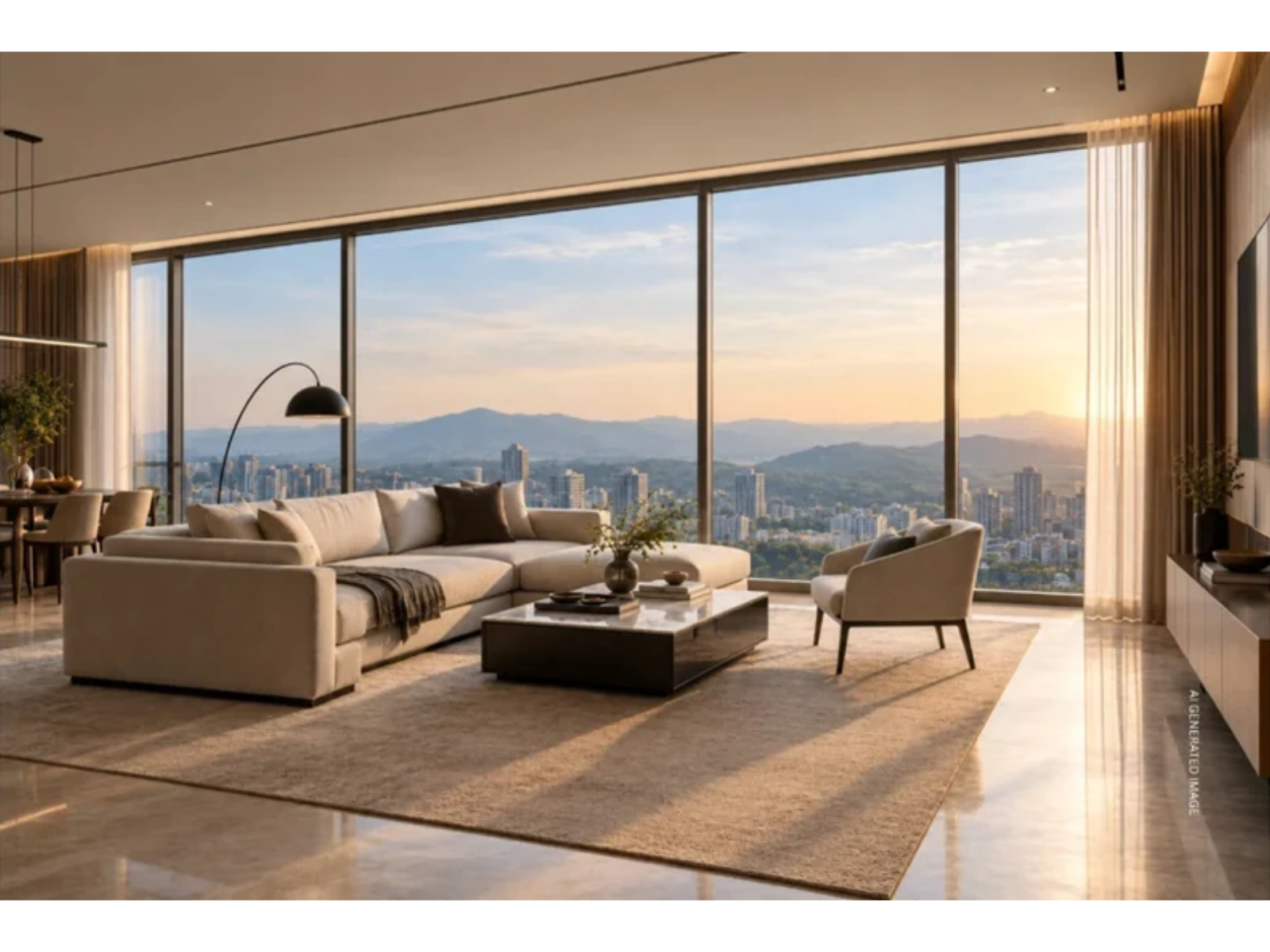
A view can transform the experience of a home. Natural light, an open skyline, landscaped surroundings or an uninterrupted green outlook can influence how a residence feels throughout the day.
In Mumbai, where development pressures are significant, views towards protected natural landscapes can be especially valuable. Kandivali’s proximity to Sanjay Gandhi National Park highlights the distinctive relationship that parts of the western suburbs have with greenery. Where a development benefits from an open outlook towards protected natural surroundings, it can offer a sense of openness that is increasingly difficult to find in a dense urban environment.
The distinction is permanence. An attractive outlook that can be built over may offer immediate appeal, but a view supported by protected natural surroundings can provide a more enduring benefit.
As buyers become more discerning, the surrounding environment is increasingly relevant to the value proposition of a luxury residence. The setting is not separate from the home; it is part of the experience the home offers.
Beyond amenities: Luxury that earns its place
The luxury housing market has no shortage of elaborate amenity lists. Yet, the presence of more facilities does not automatically translate into a better living experience.
The question is whether these spaces are useful, accessible and thoughtfully integrated into residents’ lives.
Wellness facilities, fitness spaces, landscaped gardens, children’s play areas, spaces for older residents and venues for social interaction can contribute meaningfully to a development. Equally important is ensuring that these facilities are maintained well and remain convenient to use.
Luxury is also shaped by what lies beyond the development. Access to quality healthcare, schools, retail, dining and everyday conveniences influences how comfortably a household functions. The neighbourhood becomes an extension of the residential offering.
This is where thoughtful planning creates a distinction. A well-designed home within a well-connected, liveable neighbourhood can deliver more lasting value than a property whose appeal rests primarily on its interiors or recreational features.
Time: The luxury that cannot be manufactured
For entrepreneurs, senior professionals and business leaders, time is one of the scarcest resources.
The location of a home can determine how much of each day is spent commuting and how much remains for family, health, personal interests and rest. Access to metro connectivity, arterial roads and employment centres therefore has implications beyond convenience.
A shorter commute can create more opportunities for family dinners, exercise, hobbies or simply unwinding at home.
This is why connectivity should be understood as a component of luxury living rather than just a location advantage. The value of a residence is also reflected in the time it gives back to its occupants.
For developers, this reinforces the importance of evaluating a location through the lens of everyday life: not only where a home is situated, but how effectively it connects residents to the places and people that matter to them.
Trust: The foundation beneath the premium
A luxury home is often one of the most significant financial commitments a family makes. It may be a long-term residence, an asset held across generations, or a home intended to preserve family continuity.
That makes the credibility of the developer central to the purchase decision.
Buyers need confidence in construction quality, execution capability, delivery commitments, transparency and the long-term upkeep of the development. At the luxury end of the market, where expectations are high and the cost of compromise is substantial, the gap between a promise and its delivery can be particularly consequential.
CBRE’s The New Paradigm in Indian Housing report, published in July 2025, identifies developer reputation, execution track record, inventory availability and local market dynamics as important determinants of residential sales performance.
This reinforces a fundamental principle: the luxury proposition must extend beyond the point of purchase. It must be supported by the quality of the building, the reliability of its delivery and the experience of living in it over time.
A prestigious address may attract attention. A trusted developer provides the confidence to commit.
The next chapter of luxury living
The evolution of luxury housing is not about rejecting grandeur, premium materials or distinctive architecture. It is about placing them within a broader understanding of what makes a home exceptional.
Space must offer flexibility. Privacy must be built into the plan. Views should add lasting value. Amenities should serve real needs. Connectivity should return time to residents. And the developer’s promise must stand up to scrutiny long after possession.
For Mumbai’s affluent homebuyers, luxury is becoming less about what a residence displays and more about what it consistently delivers.
The opportunity for the real estate industry is to respond with homes that combine design excellence with thoughtful planning, enduring quality and a deeper understanding of how people want to live.
Because the ultimate expression of luxury is not simply owning more.
It is living better.
Rima Kirtikar, Chief Marketing Officer, Shapoorji Pallonji Real Estate
(ADVERTORIAL DISCLAIMER: The above press release has been provided by PNN. ANI will not be responsible in any way for the content of the same.)